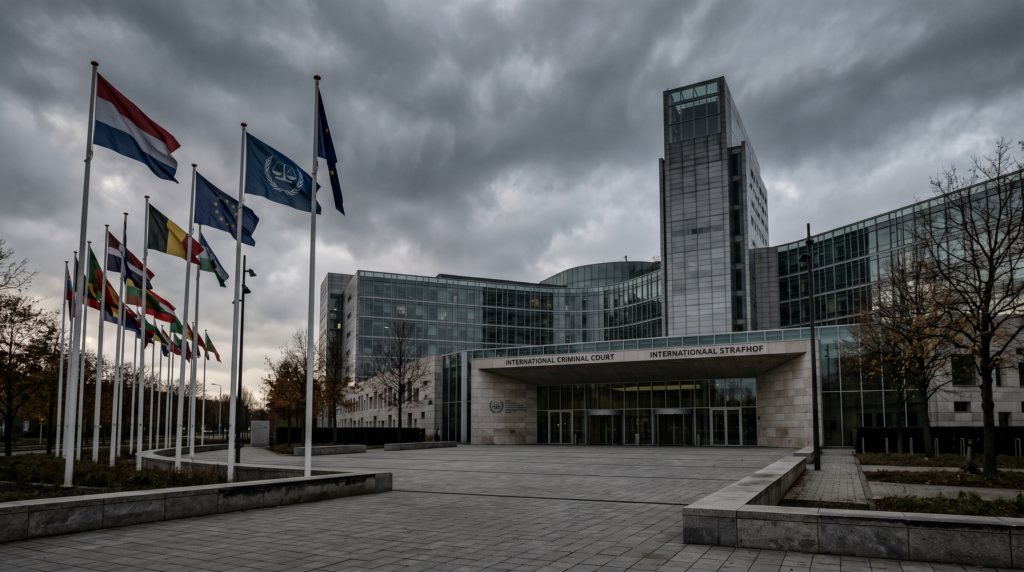
Former Philippine President Rodrigo Duterte will face a full criminal trial at the International Criminal Court after judges on the court’s Pre-Trial Chamber I unanimously confirmed all charges against him on April 23, making him the first former Asian head of state to reach this stage in the court’s history.
The chamber found there are substantial grounds to believe Duterte bears criminal responsibility for three counts of murder and attempted murder as crimes against humanity. The charges cover crimes allegedly committed between November 1, 2011 and March 16, 2019 — a period spanning his time as mayor of Davao City through the first portion of his six-year presidential administration, which ended in 2022.
According to the Pre-Trial Chamber’s decision, the alleged crimes were carried out as part of a widespread and systematic attack against civilians on Philippine territory. Prosecutors contend that Duterte established, financed, and directed death squads to kill suspected drug dealers and users, and that the campaign resulted in the deaths of thousands. The chamber’s decision identified 49 specific killing incidents involving 78 named victims as the basis for the confirmation, though human rights organizations have placed the broader toll of the drug war in the tens of thousands.
The ICC’s ruling came one day after the court’s Appeals Chamber rejected Duterte’s jurisdictional challenge, affirming that the court retains authority over alleged crimes committed while the Philippines was still a party to the Rome Statute. The Philippines withdrew from the Rome Statute in 2019, but the ICC’s preliminary examination into the drug war killings had begun in 2018 — before the withdrawal took effect. Duterte, who turned 81 in March, waived his right to attend the confirmation hearing and maintains that the court has no authority over him.
His defense team has also challenged his fitness to stand trial, but a Pre-Trial Chamber medical review in January 2026 found him fit to participate in proceedings. His lawyers retain the option to appeal the confirmation decision, though no automatic right of appeal exists. A total of 539 relatives and survivors of the drug war have been granted formal victim status and will be permitted to participate in trial proceedings.
The confirmation decision is a landmark for the Philippines’ long-fractured accountability debate. The public version of the charges document lists eight other individuals as co-perpetrators alongside Duterte, though no additional arrest warrants have been made public.
South Carolina’s senior senator, Lindsey Graham, sits in direct tension with this development. Graham is a cosponsor of the Senate’s companion version of the Illegitimate Court Counteraction Act — legislation that would impose mandatory sanctions on foreign nationals who work to investigate, arrest, or prosecute citizens of the United States or allied nations before the ICC. Graham has been one of the most vocal Senate voices calling for punitive measures against the court. The House passed its version of the bill by a 243-140 vote in January 2025. The Senate companion legislation, led by Sen. Tom Cotton of Arkansas, has not yet come to a floor vote, leaving the question of U.S. sanctions on the court unresolved. The Duterte case, involving a non-allied nation’s former leader, introduces new dimensions to that ongoing debate.
The ICC has typically taken up to a year from a charge confirmation to the start of formal trial proceedings. No trial date for Duterte has been set.