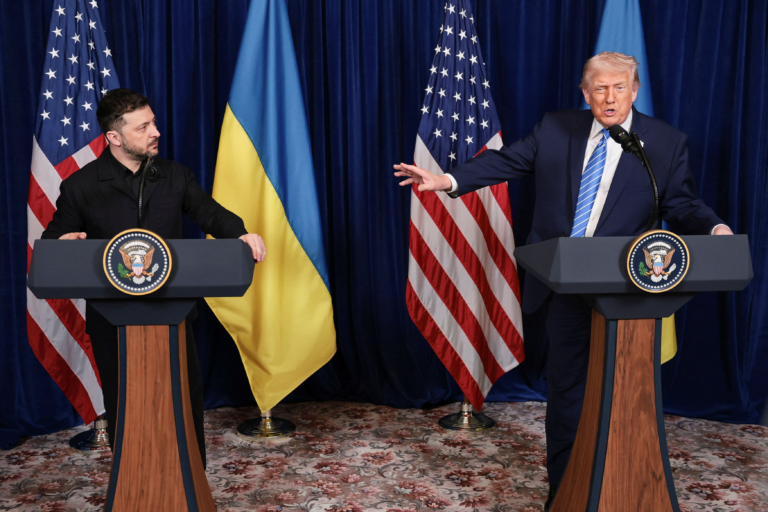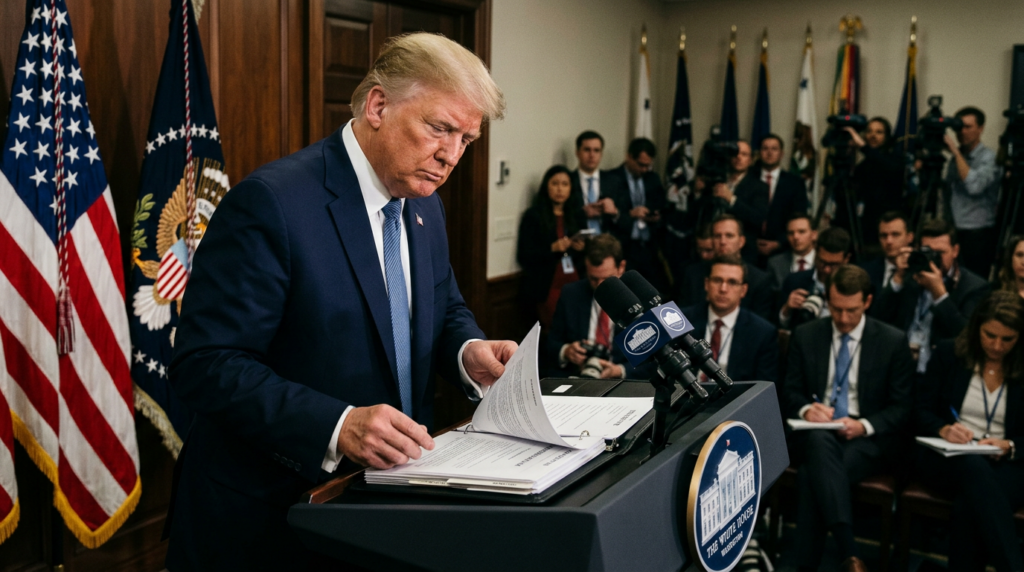
President Donald Trump confirmed Saturday that he was reviewing a newly submitted Iranian peace proposal but expressed serious doubts it would meet U.S. standards, setting up a pivotal moment in the ongoing diplomatic standoff over the Strait of Hormuz and Iran’s nuclear ambitions.
Iran transmitted the proposal — a 14-point counterproposal to Washington’s earlier nine-point framework — through Pakistani mediators late Thursday. The document, first detailed by Iranian state media, lays out Tehran’s conditions for ending a conflict now stretching past two months. The plan calls for the withdrawal of U.S. forces from Iran’s surrounding regions, a lifting of the U.S. naval blockade on Iranian ports, a new governance mechanism for the Strait of Hormuz, the release of frozen Iranian assets held abroad, the removal of all U.S. and international sanctions, and an end to the fighting on all fronts, including Lebanon.
Trump told reporters he had not yet reviewed the full wording of the proposal but said officials had briefed him on its outline. He later posted on his Truth Social platform that he would study the plan but was skeptical, writing that Iran had not yet paid a sufficient price for what he described as nearly five decades of hostile actions against the international community. Trump also warned that military escalation remained a possibility if Iran failed to meet U.S. expectations, while stopping short of specifying conditions for any renewed strikes.
The Iranian proposal directly rejects a key U.S. demand. Washington proposed a two-month ceasefire extension, while Tehran insisted all core disagreements must be resolved within 30 days. On the nuclear question — the central sticking point since U.S.-Iran talks first opened in April 2025 — Iran’s framework does not commit to surrendering its enriched uranium stockpile or dismantling its enrichment facilities, positions the Trump administration has called non-negotiable. In the first round of talks, Washington demanded Tehran surrender all enriched uranium and accept a 20-year moratorium on enrichment; Iran rejected those demands as excessive.
Iranian Deputy Foreign Minister Kazem Gharibabadi described the plan as an effort to permanently end what Tehran calls the imposed war. Secretary of State Marco Rubio, for his part, acknowledged the proposal was stronger than he anticipated but said he remained skeptical of Iran’s intentions, noting that Tehran is a skilled negotiator and that any agreement must definitively block a rapid path to nuclear weapons.
The proposal arrives against a backdrop of separate U.S. moves to reinforce its regional position: the State Department fast-tracked $8.6 billion in arms sales to Kuwait, the United Arab Emirates, Qatar, and Israel, sidestepping the normal congressional notification process by invoking emergency authority. The sales include $4 billion in Patriot missile interceptors for Qatar alone. Senior Iranian military official Mohammad Jafar Asadi said in a statement that Iran’s armed forces consider a resumption of U.S.-Israeli operations likely, arguing that American officials have shown they are not committed to any agreements or treaties.
For South Carolina’s Upstate economy, the status of the Strait of Hormuz negotiations carries real stakes. The waterway controls roughly 20 percent of global oil supply, and its partial closure since early March has driven Brent crude prices to highs above $115 per barrel — a surge that has rippled through fuel costs at Spartanburg-area pumps and raised freight surcharges affecting manufacturers along the BMW supply chain in Spartanburg County. The Inland Port Greer, which handles container traffic from the Port of Charleston, has seen elevated logistics costs tied to higher bunker fuel rates and tighter carrier capacity on trans-oceanic lanes. A negotiated resolution that reopens the strait to unimpeded commercial traffic would offer relief; a collapse of talks that reignites hostilities would almost certainly push energy costs higher still.
South Carolina’s senior senator, Lindsey Graham, has been one of the most vocal voices on Capitol Hill throughout the Iran conflict. Graham, who chairs multiple committees with defense and appropriations oversight, has said he prefers a diplomatic resolution but insists any deal must fully stop Iran’s drive toward a nuclear weapon. He has called for a formal congressional review process modeled on the Senate’s handling of the 2015 nuclear agreement, arguing that any negotiated framework deserves thorough scrutiny and a full opportunity for explanation. Graham has stated that every kilogram of enriched uranium must be secured and removed from Iran as a condition of any final accord.
The path forward remains unclear. The White House has not confirmed the specific contents of Iran’s 14-point plan, and U.S. officials have so far declined to comment on the details of the back-channel negotiations. With the naval blockade still in place and an open-ended ceasefire extension holding, both sides face mounting pressure to either reach a framework agreement or prepare for renewed confrontation.