More than three million Americans have stopped receiving federal food assistance since President Donald Trump signed sweeping changes to the Supplemental Nutrition Assistance Program into law last summer, according to preliminary figures released by the U.S. Department of Agriculture.
When Trump began his second term in January 2025, approximately 42.83 million people were enrolled in SNAP. By January 2026, that number had fallen to around 38.55 million — a decline of nearly 4.3 million participants, or roughly 10.3 percent. The steepest drop came in the months immediately following Trump’s signing of H.R. 1, the One Big Beautiful Bill Act, on July 4, 2025. From January through June 2025, enrollment declined by about 743,000. From July 2025 through January 2026, it fell by an additional 3.47 million.
The legislation made the most significant structural changes to the food stamp program in decades. Among the key provisions: able-bodied adults without dependents — a category known as ABAWDs — must now work or participate in approved job-training programs for at least 80 hours per month to maintain eligibility beyond three months in any 36-month period. The age range subject to these stricter rules expanded from 18–54 to 18–64, drawing in hundreds of thousands of older adults who were previously exempt. Exemptions for veterans, homeless individuals, and young adults who aged out of foster care were also removed. Adults in households with children between 14 and 17 — who were previously shielded — are now subject to the time limit unless they meet a separate exemption. The Congressional Budget Office estimated the law would reduce federal SNAP funding by $186 billion over the next decade, a roughly 20 percent cut.
Agriculture Secretary Brooke Rollins attributed the decline in part to reduced fraud and a strengthening economy. Analysts disputed that characterization, noting that USDA’s own data showed just 41,476 individuals were disqualified for fraud during fiscal year 2023 — less than one percent of the 42.17 million participants at the time. Food policy researchers pointed to the new eligibility restrictions as the primary driver.
What It Means for South Carolina
South Carolina is not insulated from these shifts. According to the South Carolina Department of Social Services, more than 520,000 state residents received SNAP benefits as of December 2025. About 48 percent of those recipients are under 18 years old, and nearly 25 percent are over 50. DSS noted that currently about 3 percent of the state’s SNAP clients are classified as ABAWDs — but that share is expected to grow substantially as new eligibility rules take full effect.
New federal work requirements formally took effect in South Carolina on February 2, 2026. Under those rules, adults aged 18–64 who do not have dependents under 14 must work or engage in qualifying programs for 80 hours monthly or risk losing their benefits after three months. Waivers that previously allowed states to pause work requirements in areas with insufficient jobs have been tightened; now only regions with an unemployment rate above 10 percent qualify.
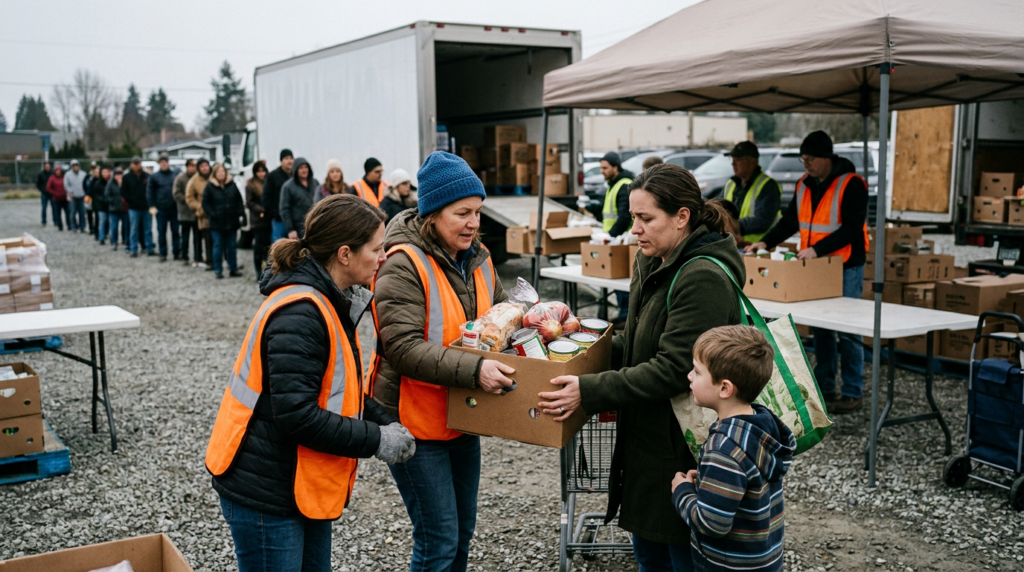
Organizations on the ground in Spartanburg County are watching the enrollment figures closely. TOTAL Ministries, which provides food and financial assistance to county residents, allows households to access food assistance every three months for those under 65, and monthly for those 65 and older. Mobile Meals of Spartanburg coordinates roughly 1,800 home-delivered meals per day, Monday through Friday, serving frail and homebound residents who may not be able to access traditional food bank distribution points. The Spartanburg Soup Kitchen has served the community for over 40 years, operating seven days a week from 7:30 a.m. to 2 p.m. As federal food aid rolls shrink, these organizations absorb the demand that SNAP no longer covers.
Rep. William Timmons, whose SC-4 district covers Spartanburg, sits on the House Financial Services and Oversight committees. He supported H.R. 1, which included the SNAP changes alongside broader tax and spending provisions.