President Trump called off a planned trip by special envoy Steve Witkoff and Jared Kushner to Pakistan on Saturday, ending a push to restart direct Iran war talks. Trump publicly framed the trip as wasted time and pointed out Iran could call to negotiate — a signal of eroding patience as the ceasefire technically holds.
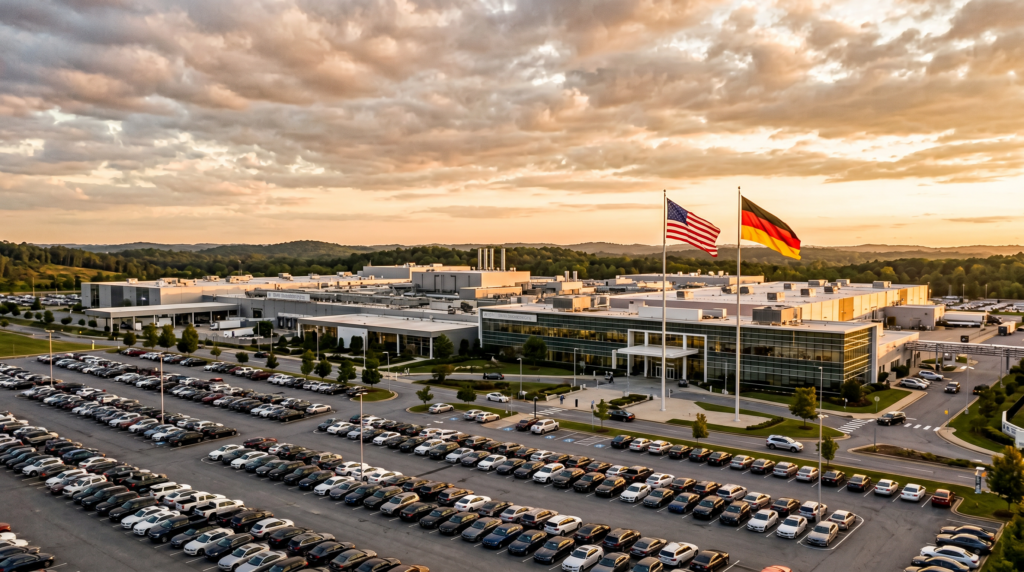
The Strait of Hormuz carries roughly 20 percent of the world’s daily oil supply, and U.S. and Israeli military pressure there has pushed crude prices above $110 per barrel since strikes began in February. That shock has direct consequences for Spartanburg County’s manufacturing corridor, where BMW Manufacturing is one of the largest single energy consumers in Upstate South Carolina.
The plant exports tens of thousands of vehicles annually through the Port of Charleston. Elevated energy costs compress margins on operations like stamping and paint finishing; BMW has offset more than 20 percent of its own consumption through landfill-gas and on-site generation programs, but the remainder tracks global oil prices. Hormuz disruption adds a second layer of exposure: shipping routes near the Arabian Sea have carried higher insurance premiums since the crisis began, raising freight costs on Upstate South Carolina exports heading to European markets.
Both of South Carolina’s U.S. senators hold institutional leverage over what comes next. Senator Lindsey Graham sits on the Senate Armed Services Committee and the Senate Foreign Relations Committee — the panels with direct authority over military posture and diplomacy toward Tehran. Senator Tim Scott chairs the Senate Banking Committee, which oversees Iran sanctions enforcement. Scott introduced legislation in 2025 to permanently repeal the sunset clause of the Iran Sanctions Act, eliminating a deadline Tehran has used as a negotiating lever. How that committee responds to any deal — or continued breakdown — will determine whether financial pressure on Iran holds.
Iran’s foreign minister called his Islamabad talks productive but questioned whether Washington was serious about diplomacy. The administration indicated Saturday the ceasefire would hold, with no timeline set for resumed negotiations.