A deepening standoff between the United States and Iran over navigation rights in the Strait of Hormuz has raised warnings that clearing the critical waterway could take as long as six months, according to Pentagon press releases. The strait carries roughly a fifth of the world’s seaborne oil, and any prolonged blockade would send supply shocks through energy markets globally.
The State Department’s Iran sanctions framework remains in force as diplomatic channels have stalled, with U.S. officials maintaining existing maximum-pressure measures while both sides hold their positions. Separately, the U.S. Energy Information Administration’s weekly petroleum report flags elevated crude price volatility tied directly to Middle East transit risk, with analysts watching Hormuz disruptions as the primary upside price driver for the coming quarter.
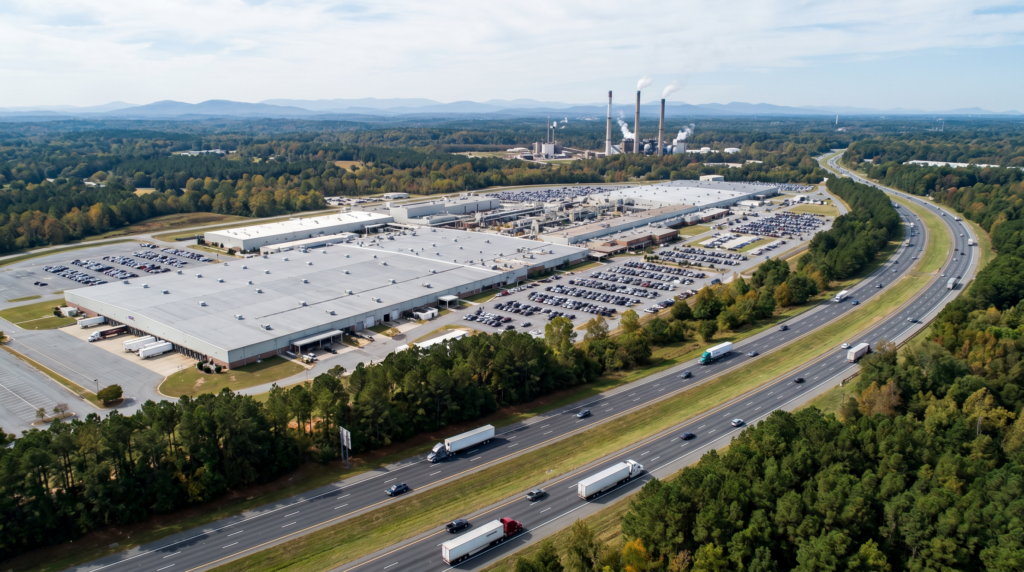
For Spartanburg County, the consequences are tangible. BMW Manufacturing’s Spartanburg plant — the largest U.S. automotive exporter by value — relies on a global supply chain that is sensitive to fuel and freight costs. A sustained rise in crude prices would increase the cost of running the BMW plant’s logistics network along the I-85 corridor and through the Inland Port Greer, which handles container cargo connecting Spartanburg-area manufacturers to the Port of Charleston. Michelin North America, which operates multiple tire facilities in the Upstate SC region, also faces upward pressure on petrochemical-derived raw material costs when crude oil prices spike.
On the energy side, Duke Energy Carolinas — which supplies power to the Spartanburg grid — generates the bulk of its electricity from natural gas and nuclear sources. A prolonged Hormuz crisis would tighten global natural gas markets, potentially affecting wholesale power prices for industrial customers across Spartanburg County. The BMW plant, which has committed to carbon-neutrality targets, has invested in on-site renewable energy infrastructure, providing some insulation against fossil fuel price swings — but the broader supplier base would feel increased operating costs.
Spartanburg County’s broader manufacturing economy, including ZF Transmissions, Draexlmaier Group, and Plastic Omnium, depends on affordable freight and energy costs to maintain competitiveness. Any extended shock to oil markets would filter through to those operations within weeks.