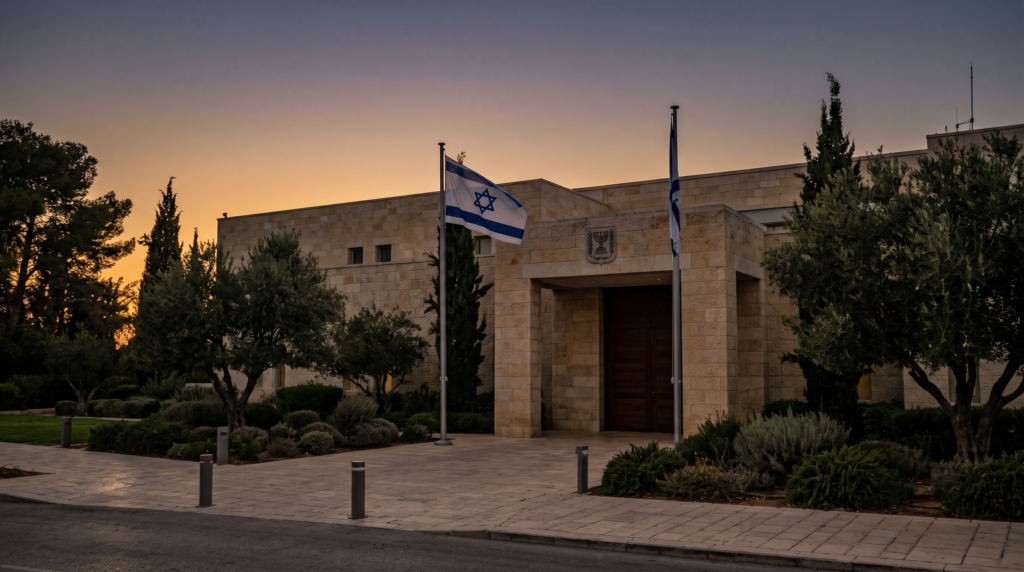
Israeli President Isaac Herzog announced Sunday that he will not issue a pardon to Prime Minister Benjamin Netanyahu in his long-running corruption case — at least not yet. Instead, Herzog said he intends to pursue informal mediation between Netanyahu’s legal team and state prosecutors in hopes of reaching a negotiated plea agreement outside the courtroom, according to his office and senior officials in Jerusalem with direct knowledge of his thinking.
The announcement marked a significant rebuff of the pardon request Netanyahu formally submitted in November, when the prime minister argued that the ongoing trial was fueling national division at a time when Israel needed unity. Netanyahu, 76, has been on trial since 2020, facing charges of bribery, fraud and breach of trust across three interconnected cases. The indictments, filed in 2019 after years of investigations, center on allegations that he steered government favors toward wealthy businessmen in exchange for gifts and favorable media coverage for himself and his family. Netanyahu has consistently denied all wrongdoing.
Herzog’s office said the president views achieving a consensual resolution between the parties as an important public interest, and that before addressing the pardon request directly, efforts should first be exhausted to reach an agreement between the parties outside the walls of the courtroom. His office added that any final decision on the pardon would be made solely in line with Israel’s legal framework, guided by the president’s conscience and in the best interests of the state.
A plea agreement would carry significant consequences. Under Israeli law, such a deal would typically require an admission of guilt and could compel Netanyahu to resign from office — conditions Netanyahu has previously called unacceptable. The prime minister has repeatedly characterized the proceedings against him as a politically motivated attempt to remove him from power.
The move comes amid considerable external pressure on Herzog. U.S. President Donald Trump has lobbied publicly and repeatedly for a pardon, calling Herzog’s hesitation unacceptable in statements stretching back months. In February, Trump called the Israeli president a weak and pathetic guy for not acting. Herzog’s office responded by reaffirming that the president would act without pressure from any direction, whether foreign or domestic. A previous mediation attempt in late 2021 and early 2022, led by a former Supreme Court president, collapsed without agreement when the attorney general’s term ended before a deal could be reached.
The stakes extend well beyond the courtroom. Israeli national elections are anticipated before the end of October 2026, and any decision on the pardon — granted or denied — would likely reshape both Netanyahu’s political future and Herzog’s own legacy. The trial has fractured Israeli public opinion for years and unfolded against a backdrop of regional conflict, including the wars in Gaza and Lebanon and the recent ceasefire following the Iran conflict.
For South Carolina’s federal delegation, the Netanyahu case intersects directly with months of active engagement on U.S.-Israel policy. Sen. Lindsey Graham, a senior member of the Senate Appropriations Committee who chairs the State, Foreign Operations and Related Programs subcommittee, traveled to Israel in January to meet with Netanyahu. Graham described the Trump-Netanyahu alliance as one of the strongest partnerships in the history of the U.S.-Israel relationship. Earlier, Graham made international headlines by threatening sanctions against any U.S. ally that sought to enforce International Criminal Court arrest warrants against Netanyahu for alleged war crimes in Gaza — a separate legal matter from the domestic corruption case. Graham’s committee role gives him direct influence over U.S. security aid to Israel, a relationship Netanyahu himself said he intends to wind down over the next decade. Graham responded by pledging to expedite that process and redirect the savings into the U.S. military.
The trial, now in its seventh year, shows no sign of a near-term conclusion through the courts alone. Herzog’s proposed mediation path is viewed in presidential circles as a long-shot effort but one worth attempting to reduce the rifts surrounding the trial. Legal experts have noted that even if mediation succeeds, any resulting agreement would face scrutiny at Israel’s High Court of Justice. Herzog is still awaiting a formal recommendation from his own legal counsel before taking any definitive action on the pardon request itself.