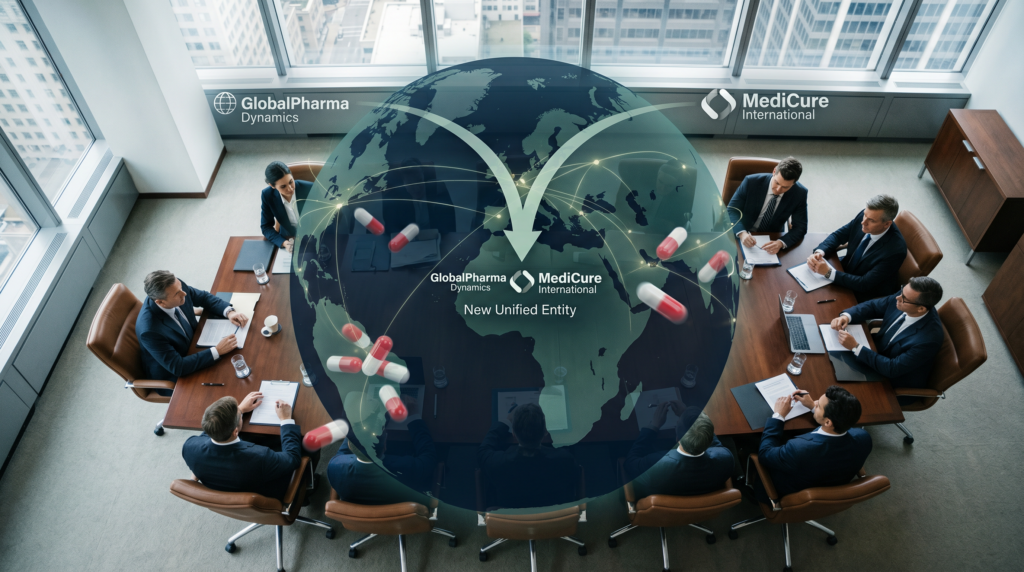
India’s largest pharmaceutical company has agreed to buy a New Jersey-based global drugmaker in an all-cash deal valued at $11.75 billion, a transaction that would vault the combined entity into the top tier of worldwide pharmaceutical firms and reshape how biosimilar medicines reach patients across the United States — including through the hospital networks and pharmacy systems serving South Carolina.
Sun Pharmaceutical Industries announced April 26 that it had signed a definitive agreement to acquire Organon & Co., paying $14 per share for all outstanding common stock. That price represents a 103 percent premium to where Organon’s shares traded on April 9, before deal speculation began circulating. Organon’s stock surged roughly 31 percent in a single session when those reports emerged, and the shares continued to climb after the formal announcement.
Organon was established in 2021 as a spinoff from Merck, the multinational pharmaceutical giant known as MSD outside the United States and Canada. Since its formation, Organon has built a portfolio of more than 70 products spanning women’s health, biosimilars, and established medicines, distributing them across more than 140 countries. Its largest markets include the United States, Europe, China, Canada, and Brazil. The company operates six manufacturing facilities in the European Union and emerging markets, and for calendar year 2025 it reported $6.2 billion in revenue and adjusted EBITDA of $1.9 billion.
For Sun Pharma, the acquisition represents a dramatic expansion in scale. The combined company would generate approximately $12.4 billion in annual revenue, placing it among the top 25 global pharmaceutical firms. It would also become the seventh-largest biosimilar company worldwide and a top-three player in global women’s health — an area that offers relatively stable cash flows and differentiation compared with commoditized generics. Post-deal, innovative medicines would account for about 27 percent of combined revenue, up from roughly 20 percent of Sun Pharma’s standalone sales.
Sun Pharma’s executive chairman Dilip Shanghvi said in the joint announcement that the transaction represents a significant opportunity to build on the company’s vision of reaching patients and touching lives globally, describing Organon’s portfolio and global reach as highly complementary to Sun Pharma’s existing strengths. Sun Pharma’s managing director Kirti Ganorkar said the deal is a logical next step in strengthening the company’s global business, with immediate priorities centered on business continuity and disciplined integration. Organon’s executive chair Carrie Cox noted that the board concluded following a comprehensive review of strategic alternatives that the all-cash terms deliver compelling and immediate value to Organon stockholders.
The deal will be structured as a merger, with Organon surviving as a subsidiary of Sun Pharma. Financing will come from a combination of Sun Pharma’s existing cash and committed bank facilities. The transaction has been approved by the boards of both companies and is expected to close in early 2027, subject to regulatory clearances and Organon stockholder approval.
For South Carolina’s health care sector, the consolidation carries practical implications. Prisma Health — the state’s largest integrated health network, serving patients across Upstate and Midlands markets including the Spartanburg region — and Spartanburg Regional Healthcare System both rely on biosimilar formularies as a tool for managing rising drug costs. Biosimilars, the lower-cost alternatives to complex biologic medicines, have been central to Organon’s growth strategy since the company’s founding. The SC Department of Commerce, which tracks pharmaceutical investment and distribution footprint across the state, monitors deals of this scale for any shifts in distribution or supply chain patterns that could affect facilities operating in South Carolina.
Sen. Tim Scott, who serves on the Senate Banking Committee and has been a consistent advocate for competitive pharmaceutical markets, has long championed policies aimed at expanding generic and biosimilar access as a means of lowering health care costs. A transaction of this size — representing the largest-ever acquisition by an Indian pharmaceutical company — falls squarely in the category of cross-border pharmaceutical investment that banking and finance regulators will scrutinize before granting approval.
The deal is expected to generate significant cost synergies over time, with combined EBITDA set to nearly double from current levels and a post-transaction net debt-to-EBITDA ratio of approximately 2.3 times. J.P. Morgan Securities and Jefferies are advising Sun Pharma on the transaction; Morgan Stanley and Goldman Sachs are advising Organon.