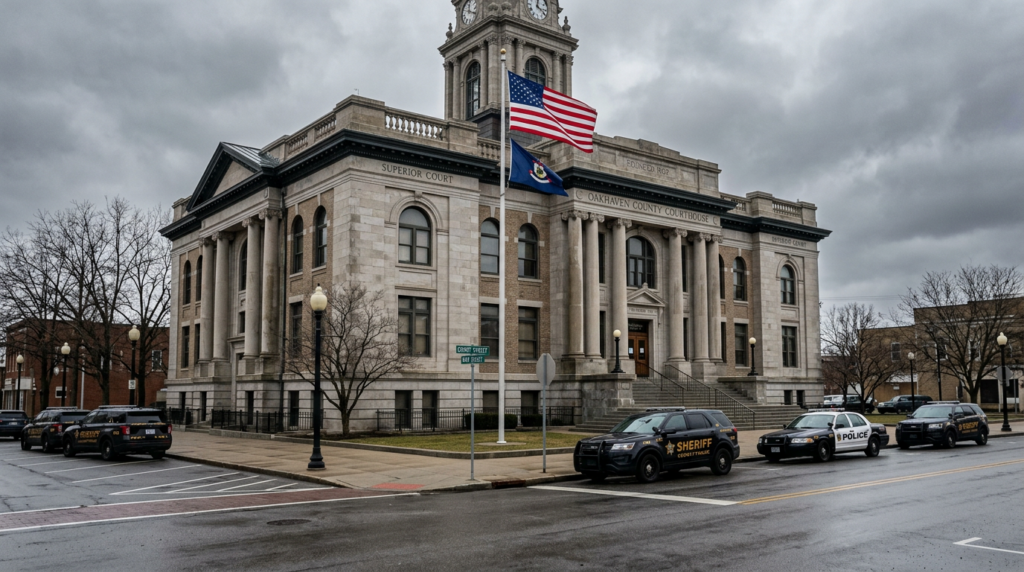
A former public official in Mississippi has been indicted on child sex crime charges, with a grand jury returning a seven-count indictment against a deputy coroner whose position gave him access to vulnerable community members for years.
Bobby Joe Evans, 49, who served as Lamar County’s deputy coroner, was arrested Thursday on seven counts of touching a child for lustful purposes. Sheriff Danny Rigel, who oversees the Lamar County agency, has acknowledged the arrest and said the indictment accuses Evans of sexually abusing a child over a period of years. Evans had held the deputy coroner post, a county-appointed public safety role involving deceased persons investigations.
The Lamar County case underscores a pattern that law enforcement agencies across the South have increasingly spotlighted: the exploitation of positions of public trust to access victims. In South Carolina, that concern prompted a coordinated enforcement response just weeks before the Mississippi indictment. On April 9 and April 10, the South Carolina Law Enforcement Division’s Human Trafficking Unit partnered with the Greenville Police Department on a two-day child sex exploitation sting operation. The operation resulted in 11 arrests, the issuance of 37 warrants, three ICE detainers, and one parole violation.
Among those arrested in the South Carolina operation were two Spartanburg residents: Marco Antonio Ruiz Jimon, 40, and Jhonatan D. Cortez, 26, each charged with Criminal Sexual Conduct with a Minor in the Third Degree, Participation in Prostitution of a Minor, and Human Trafficking in the First Offense. Both Ruiz Jimon and Cortez had ICE detainers lodged against them. Greenville police said investigators established an online presence across multiple platforms to identify individuals attempting to arrange sexual contact with minors, with officers receiving specialized training and support from Covenant Rescue Group.
The South Carolina Law Enforcement Division’s Human Trafficking Unit has become one of the state’s primary tools for addressing child sex exploitation. SLED coordinates with local departments across South Carolina’s counties, providing investigative resources and specialized expertise that municipal forces often lack independently. Authorities said additional charges were possible as that investigation remained open.
The Evans indictment comes as state legislatures across the region move to tighten laws governing sex offenders. In South Carolina, House Bill 4683, the Sex Offender Child Protection Act, was prefiled in December 2025 and referred to the House Judiciary Committee. The measure would prohibit registered sex offenders from residing within one thousand feet of schools, daycare centers, parks, and children’s recreational facilities, and would bar them from owning or working in businesses providing unsupervised access to minors. The bill further requires SLED to notify all registered sex offenders in the state of the new provisions within one year of enactment. As of early May 2026, the legislation remained in committee.
Evans had not entered a plea as of initial reports. Lamar County officials did not immediately detail when bond proceedings were scheduled. The case is expected to proceed through the Lamar County circuit court system.