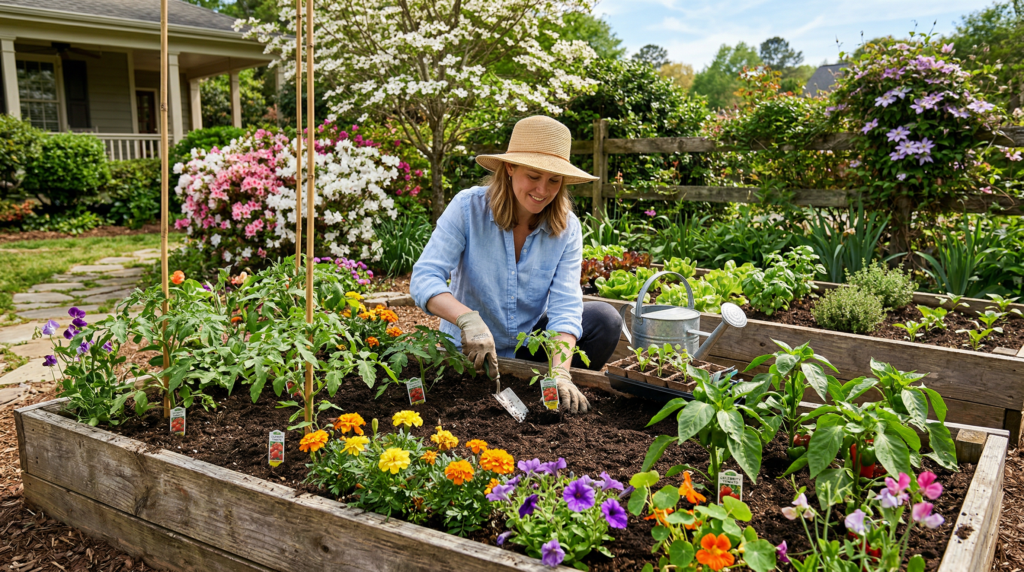
April is one of the most active months in the Spartanburg County garden. With the region sitting in USDA Hardiness Zone 8a, gardeners here have a long, productive growing season — and this month marks the critical transition from cool-season crops to the warm-season vegetables and flowers that will carry the garden through summer.
The average last frost date in the Spartanburg area falls in early to mid-April, which means that by mid-month, the risk of a hard freeze has largely passed for most years. Gardeners who have been nurturing tomatoes, peppers, eggplants, and basil indoors since late winter are now in the hardening-off window — gradually acclimating seedlings to outdoor temperatures and sun before transplanting them into beds.
For direct sowing outdoors, April is the time to get beans, squash, cucumbers, okra, sweet corn, Southern peas, and sunflowers into the ground. Warm-season flowers including marigolds, nasturtiums, zinnias, and borage can go directly in the soil this month as well. The soil should be warming toward the 60-degree threshold that warm-season crops prefer before transplanting tender seedlings like tomatoes and peppers.
What to Plant in Zone 8a This Month
Cool-season crops — lettuce, spinach, peas, broccoli, and carrots — planted earlier in the spring may still be producing, but their window is shortening as temperatures climb. Gardeners who haven’t planted spring cool-season vegetables should do so immediately, as heat will push them to bolt within weeks.
For flower gardeners, April is prime time. Perennials like coneflower, black-eyed Susan, daylilies, and phlox are well-suited to Zone 8a and can be transplanted into beds now. Camellias, gardenias, hydrangeas, crape myrtles, and azaleas — the Southern garden classics — are also at their most showy this time of year and can be planted or divided now.
Potatoes that were planted in late winter or early March should be hilled up as growth continues. Strawberry beds benefit from attention to runners and mulch this month. Fruit trees that are leafing out can be assessed for pest pressure and treated organically if needed.
Hatcher Garden in downtown Spartanburg and Croft State Park’s grounds offer local examples of Zone 8a plantings in a public setting, giving gardeners a chance to see what’s performing well this time of year before making their own planting decisions.
What’s Happening
Q: What is USDA Zone 8a and does Spartanburg fall within it?
A: USDA Zone 8a covers areas with average minimum winter temperatures between 10 and 15 degrees Fahrenheit. Most of Spartanburg County falls within Zone 8a, with some cooler pockets at higher elevations approaching Zone 7b.
Q: What vegetables should I plant in Spartanburg in April?
A: Direct sow beans, squash, cucumbers, okra, sweet corn, and Southern peas outdoors in April. Harden off and transplant tomatoes, peppers, eggplants, and basil by mid-to-late month once nighttime temperatures stay consistently above 50 degrees.
Q: Is it safe to transplant tomatoes outdoors in Spartanburg in April?
A: By mid-April, the frost risk in Spartanburg’s Zone 8a is largely past most years, but gardeners should watch the forecast and keep row covers or frost cloth on hand for late cold snaps.
Q: What flowers do well in Zone 8a in April?
A: Marigolds, zinnias, nasturtiums, sunflowers, and borage can be directly sown outdoors now. Coneflower, daylilies, black-eyed Susan, and Southern perennial classics like hydrangeas and crape myrtles can be planted or transplanted this month as well.