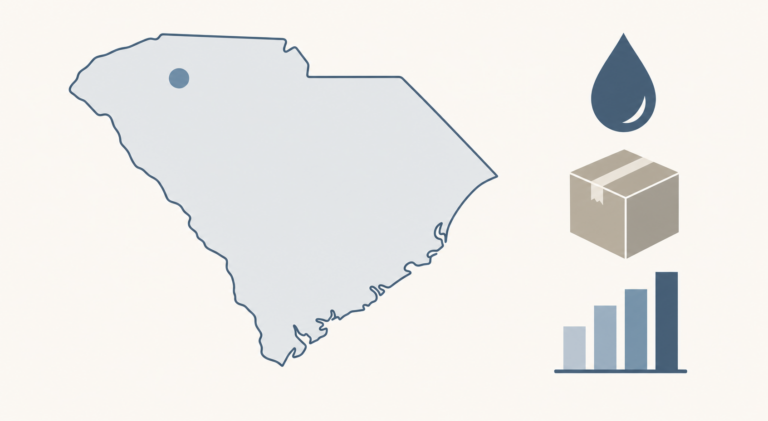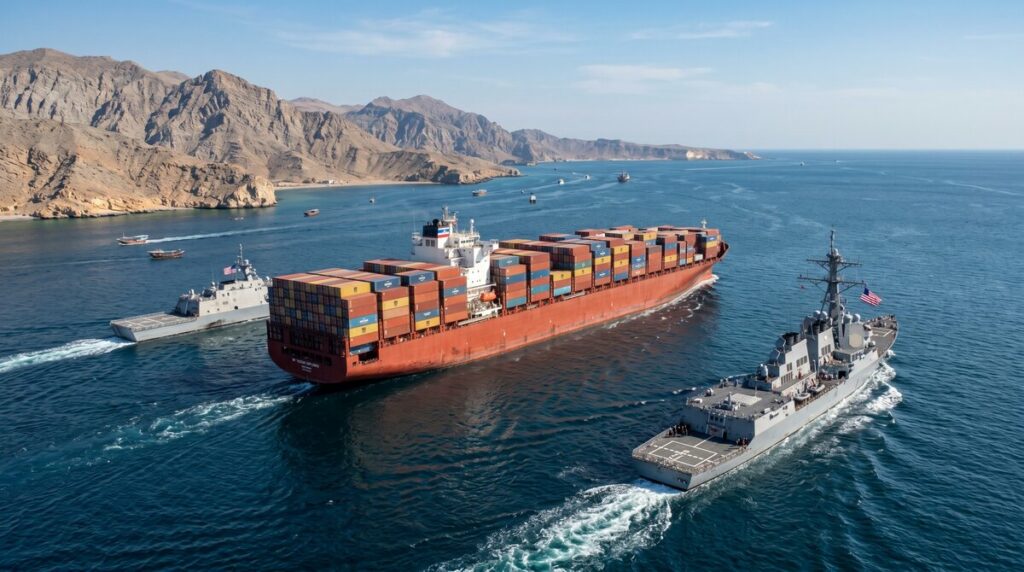
The Strait of Hormuz — the narrow waterway through which roughly 20 percent of the world’s oil supply flows — is fully open again after a tense 10-day closure that rippled through global energy markets and sent shockwaves into manufacturing corridors as far inland as Spartanburg, South Carolina.
Iran’s Foreign Minister confirmed Friday that the strait is “completely open” following a ceasefire agreement, and more than 40 nations convened in Paris this week to organize a multinational coalition for military escort operations and mine-clearing missions along the corridor. President Donald Trump claimed Iran had committed to “never close” the strait again, though a U.S. naval presence remains in the region as a deterrent. (Al Jazeera)
The reopening marks a significant reversal from earlier this month, when Iran’s government halted transit through the 21-mile-wide chokepoint amid escalating tensions with the United States. The closure immediately disrupted petroleum shipments from Saudi Arabia, the UAE, Kuwait and Iraq, contributing to a spike in national gasoline prices that briefly touched $4 per gallon.
What It Means for Spartanburg’s Manufacturers
For a city whose industrial identity is anchored by BMW Manufacturing’s largest plant in the world and Michelin North America’s headquarters, the Hormuz situation was never an abstraction. Both companies operate global supply chains with significant exposure to Middle Eastern energy markets.
BMW Spartanburg, which assembles more than 400,000 vehicles per year and exports the majority of them, depends on stable energy prices to manage the cost of logistics, components shipping, and production operations. Michelin, headquartered in Greenville County but with major operations throughout the Upstate, relies on petroleum-derived synthetic rubber compounds and energy-intensive manufacturing processes that track closely with oil prices.
Plant managers and regional logistics coordinators were watching the situation carefully. While neither BMW nor Michelin made public statements about operational disruptions, industry analysts noted that any extended closure would have begun affecting production schedules within two to three weeks as component inventories drew down.
The coalition forming in Paris — led by European and Gulf state partners — aims to prevent a repeat closure by establishing a permanent maritime security presence in the strait. A Euronews report identified France, Germany, the United Kingdom, Japan, and South Korea among the nations participating in the Paris talks.
Gas Prices: Relief Ahead
Spartanburg County motorists who endured prices approaching $3.85 to $3.95 per gallon at local stations during the crisis week should expect gradual relief over the coming 10 to 14 days as tanker traffic resumes and oil markets reprice. Analysts project national prices could retreat to the $3.40 to $3.60 range by early May if the ceasefire holds.
South Carolina benefits from lower-than-national-average state gas taxes, which has somewhat cushioned Upstate drivers compared to Northeast or West Coast consumers. Still, the price spike added real household expenses for Spartanburg County residents during the closure period.
Fragility Exposed
The episode underscores how a conflict thousands of miles away can land directly on Main Street Spartanburg. Local economists and business leaders have increasingly pointed to supply chain resilience as a strategic priority for the Upstate, given the region’s heavy dependence on internationally integrated manufacturing.
OneSpartanburg’s Vision Plan 3.0 process — the survey for which closes today, April 19 — specifically identifies supply chain diversification as an element of the region’s long-term economic competitiveness strategy. Participants can still submit responses at onespartanburginc.com/visionplan before midnight.
For now, tankers are moving. The coalition is organizing. And Spartanburg’s factory floors should see supply pressure ease in the weeks ahead — contingent, as ever, on the fragile diplomacy holding.
What’s Happening: Q&A
Q: Is the Strait of Hormuz fully open right now?
Yes. Iran’s Foreign Minister confirmed the strait is “completely open” following a 10-day ceasefire agreement announced April 17, 2026. A U.S. naval presence remains in the region.
Q: What does this mean for gas prices in Spartanburg?
Prices that peaked near $3.85 to $3.95 per gallon locally are expected to ease over 10 to 14 days as oil tanker traffic resumes. Analysts project a return to the $3.40 to $3.60 range nationally by early May if the ceasefire holds.
Q: How does this affect BMW Spartanburg and Michelin?
Both companies have supply chains sensitive to energy prices. The closure had not yet caused confirmed production disruptions, but analysts said an extended closure would have affected operations within two to three weeks.
Q: What is the 40-country coalition doing?
More than 40 nations met in Paris this week to organize military escort operations and mine-clearing missions along the strait corridor to prevent future closures.
Q: Where can Spartanburg residents track gas prices?
GasBuddy and AAA Carolinas publish daily regional price averages. SC’s lower gas tax typically keeps Upstate prices 10 to 15 cents below the national average.