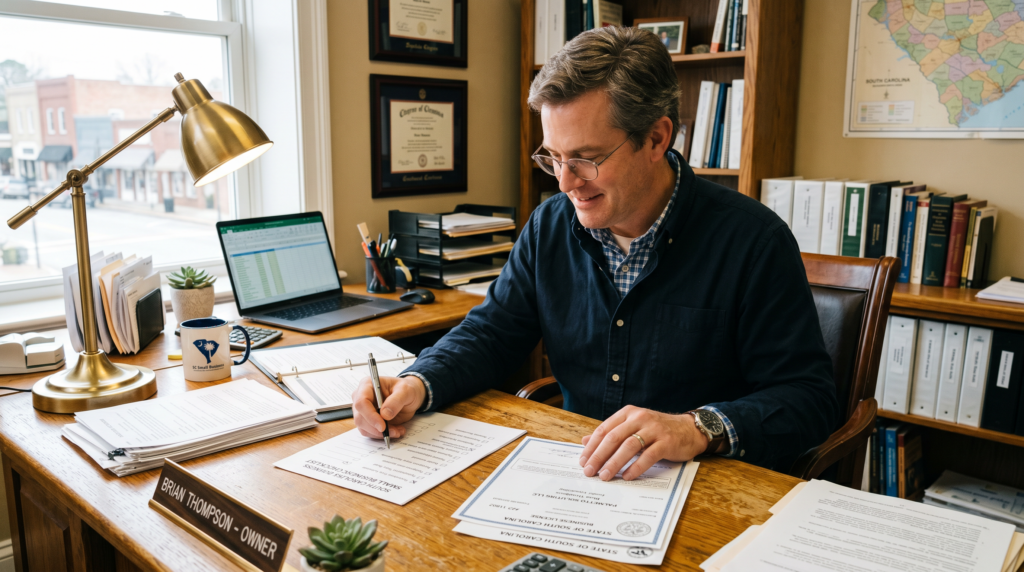
Why this guide matters
Getting “licensed” in South Carolina is rarely one single form. For many Spartanburg small businesses, compliance is a checklist across the state, the city/county, and your industry (especially if you serve the public, handle food, or operate vehicles). This guide is a practical starting point you can reuse for planning and documentation.
Step 1: Confirm your business structure
- Sole proprietor: simplest setup, but personal liability exposure.
- LLC: common for local service businesses; separates personal and business liability in many cases.
- Corporation (S-Corp/C-Corp): can make sense for payroll planning or multi-owner structures.
Your structure affects taxes, registrations, and how you open bank accounts and sign contracts.
Step 2: Register your business name (if needed)
If you operate under a name different from your personal name or legal entity name, you may need a “doing business as” name filing depending on your structure and how you present the brand to customers.
Step 3: Get a federal EIN (even if you don’t have employees)
An EIN is often required to open a business bank account, apply for certain permits, and set up payment processors. Many businesses get one early to keep personal and business systems separated.
Step 4: Check South Carolina tax registration requirements
In South Carolina, businesses that sell taxable products or certain services often need to register for state sales tax collection and reporting. If you will have employees, you also need to consider state withholding and unemployment requirements.
Step 5: Verify Spartanburg local license rules
Many businesses need a local business license based on where they operate (city limits versus unincorporated areas) and the nature of the work. If you’ll have a storefront, signage, customer traffic, or specific hours of operation, local rules and zoning can become part of your licensing path.
Step 6: Industry permits and common “gotchas”
- Food and beverage: health department inspections, food safety requirements, and occupancy rules.
- Contractors and trades: state or local credentialing, bonding, and insurance requirements depending on scope.
- Home-based businesses: zoning/HOA rules and signage limits can apply.
- Vehicles and delivery: commercial auto insurance and safety policies matter if employees drive.
Step 7: Insurance and documentation you should have before opening day
- General liability insurance (common baseline for many businesses)
- Workers’ compensation (if applicable)
- Professional liability (for advice-based services)
- Signed customer agreement/terms and a basic privacy policy if you collect customer data
Step 8: Build a simple compliance binder
Even a small business should keep a “binder” (digital folder is fine) with: EIN letter, formation documents, insurance certificates, local license/permit docs, and the most important vendor contracts. It reduces headaches during renewals, bank requests, insurance audits, and buyer due diligence.
Bottom line
For Spartanburg small businesses, the fastest path is to confirm your structure, get an EIN, verify state tax registration needs, then confirm local licensing and any industry permits. Build a compliance binder early, and renewals become predictable instead of stressful.
What’s Happening in Spartanburg — Q&A
Q: Do all Spartanburg businesses need a business license?
A: Many do, but requirements depend on where you operate (city vs. county) and your industry. Check local rules based on your physical location and business activity.
Q: What’s the first step before applying for permits?
A: Confirm your legal structure (sole prop, LLC, corporation) so your registrations and documents are consistent everywhere.
Q: Why get an EIN if I’m a one-person business?
A: It helps separate business and personal operations, and it’s often needed for banking, payment tools, and some permits.
Q: What’s the most common licensing mistake?
A: Treating “business license” as one form, when it’s usually a checklist across state tax rules, local licensing, and industry-specific permits.