The ceasefire between the United States and Iran remained in place Wednesday as Defense Secretary Pete Hegseth declared the truce intact despite ongoing military skirmishes in and around the Strait of Hormuz, and President Donald Trump signaled his intent to push toward a permanent agreement.
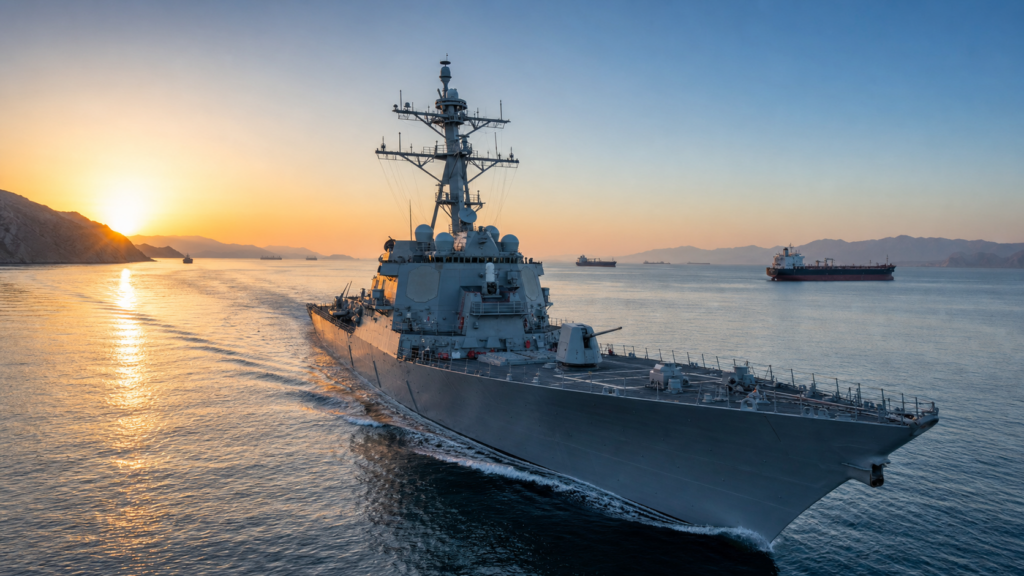
Hegseth, speaking at a Pentagon briefing alongside Gen. Dan Caine, the chairman of the Joint Chiefs of Staff, described the ceasefire as a separate and distinct arrangement from the broader U.S.-Israeli military campaign against Iran, codenamed Epic Fury. He said American forces had established what he called a security dome over the strait, with destroyers on station and hundreds of fighter jets, helicopters, drones, and surveillance aircraft operating around the clock to protect commercial vessels.
The ceasefire took effect April 8. Hegseth acknowledged the days since had been turbulent, with Iran firing on U.S. Navy ships, American forces destroying seven small Iranian military boats, and renewed Iranian drone and missile launches against the United Arab Emirates. A South Korean commercial vessel was struck in what officials characterized as an Iranian attack, and three people were injured in an Iranian strike on a petroleum facility in the UAE’s Fujairah port zone. Iran maintained that a U.S. strike on a passenger boat resulted in the deaths of five civilians.
The operation to reopen the waterway, dubbed Project Freedom, succeeded in guiding two U.S.-flagged commercial ships through the strait with naval escorts on Monday, May 5 — the highest level of hostilities recorded since the truce began. Despite that passage, ship-tracking data showed overall traffic through the strait at a near standstill more than 24 hours later. U.S. officials said roughly 1,550 ships remained stranded. Before the conflict, approximately 20 percent of the world’s oil and natural gas passed through the strait each day.
Hegseth framed the U.S. role as temporary, saying Washington intended to hand responsibility for maintaining safe passage back to the international community once stability was restored. He said Iran was not in control of the waterway, and the administration was in contact with shipping firms and insurers to encourage vessels to resume movement. Iranian-flagged vessels were not permitted through.
At the pump, American drivers felt the conflict’s weight. The national average for regular gasoline reached $4.48 per gallon by Tuesday, up from under $3.00 before the war began, as roughly 20 percent of the world daily oil and gas supply flows through the blocked strait. Trump, asked about the economic toll, said he expected prices to fall sharply once the conflict concluded, and he dismissed concerns about the short-term cost as a small price to pay.
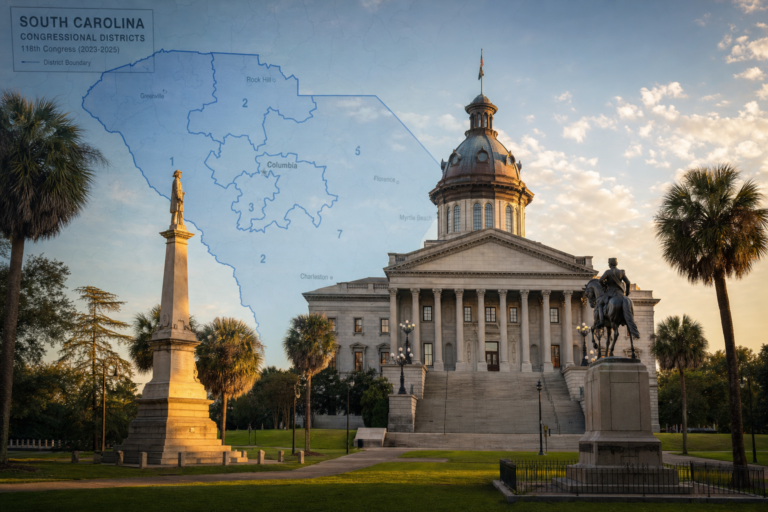
For South Carolina’s congressional delegation, the developments carry direct relevance. Sen. Lindsey Graham, who serves on both the Senate Armed Services Committee and the Senate Appropriations Committee, has been one of the most prominent voices in Washington on U.S. military posture in the Middle East. The state’s military installations — including Joint Base Charleston, Shaw Air Force Base in Sumter, Parris Island Marine Corps Recruit Depot, and Marine Corps Air Station Beaufort — house tens of thousands of active-duty personnel whose deployments and readiness levels are directly tied to the pace and scope of operations like Project Freedom. Rep. William Timmons, who represents Spartanburg and Greenville in the SC-4 district and sits on the House Financial Services Committee, has an additional lens on the conflict: energy price shocks ripple directly into the manufacturing economy of the Upstate, where BMW’s Spartanburg County plant and Michelin’s North American headquarters in Greenville depend on stable energy and supply-chain costs.
The administration has not announced a timeline for ceasefire finalization talks, but Trump indicated that negotiations were progressing and that he anticipated a deal could be formalized in the near term.