Published by A. Adaeze Mason, Real Estate & Living Editor
Property Taxes in SC Are More Favorable Than Most States — Here Is How They Work
South Carolina’s property tax system has several structural advantages for primary homeowners, including a low assessment ratio, an exemption from state-level property taxes, and a homestead exemption for qualifying seniors. Understanding the system before you buy helps you budget accurately and avoid surprises at your first tax bill.
How SC Property Taxes Are Calculated
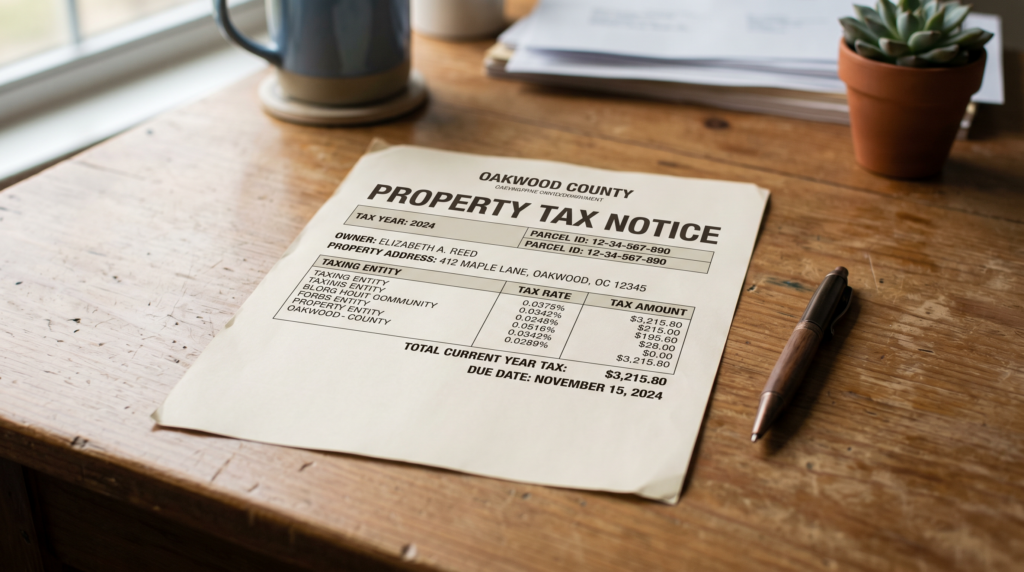
Your property tax bill is calculated from three components: the assessed value, the millage rate, and any exemptions that apply.
Assessed value is a percentage of your property’s fair market value (FMV). SC uses different assessment ratios depending on property type:
- Primary residence (owner-occupied): 4 percent of FMV
- Non-primary residence, investment property, vacation home: 6 percent of FMV
- Agricultural real property: 4 percent of use value
- Commercial property: 6 percent of FMV
The 4 percent vs. 6 percent distinction matters enormously. On a $248,000 home, the 4 percent assessment produces a taxable value of $9,920, versus $14,880 at 6 percent — a $4,960 difference in taxable value before millage is applied.
Millage Rates in Spartanburg County
Millage rates are set annually by Spartanburg County Council and vary by municipality, school district, and special purpose districts within the county. One mill equals $1 per $1,000 of assessed value. Total millage for unincorporated Spartanburg County areas typically falls in the range of 220 to 260 mills when combining county, school district, and other levies. The exact millage rate for any specific address can be confirmed through the Spartanburg County Auditor’s office.
On a $248,000 primary residence at 4 percent assessment ($9,920 taxable value) and a combined rate of approximately 240 mills, the annual tax bill runs approximately $2,381. The SC Act 388 exemption (see below) eliminates the school operating portion of that millage for primary residences, reducing the effective rate and actual bill significantly.
SC Act 388 — The Primary Residence Exemption
SC Act 388, passed in 2006, eliminated the school operating portion of property taxes on owner-occupied primary residences. This is not a small deduction — the school operating levy is one of the largest components of the total millage rate. The practical effect is that primary homeowners pay school bond millage (for debt service on school construction) but not the school operating levy that funds day-to-day school operations. This is funded instead through a statewide one-cent sales tax.
The Act 388 exemption is one of the most significant reasons SC property taxes on primary residences are low compared to neighboring states. It applies automatically when you establish primary residency and file the 4 percent assessment application with the Spartanburg County Assessor.
Homestead Exemption
South Carolina offers a Homestead Exemption that exempts the first $50,000 of fair market value from property taxes for qualifying homeowners who are 65 or older, totally and permanently disabled, or legally blind. The application is filed with the Spartanburg County Auditor’s office. For a qualifying senior who owns a $248,000 home, the Homestead Exemption reduces the taxable fair market value to $198,000 before the 4 percent assessment is applied.
How Assessments Work and When Reassessment Happens
South Carolina conducts countywide property reassessments on a five-year cycle. Spartanburg County completes reassessments as scheduled by the SC Department of Revenue. Outside of a countywide reassessment, your assessed value is typically capped — SC limits how much the assessed value can increase between reassessments for properties that have not been sold or substantially improved. When a property sells, it is reassessed to the sale price, which is why buyers will see a new tax bill that may differ from what the previous owner was paying.
Payment Schedule
Spartanburg County property taxes are assessed as of January 1 each year. Tax notices are mailed in the fall, and taxes are due by January 15 of the following year. Payment can be made to the Spartanburg County Treasurer’s office. If your home is purchased with a mortgage, your lender will typically collect property tax escrow monthly and pay your tax bill on your behalf from the escrow account. Failure to pay property taxes by January 15 results in a penalty; continued non-payment can eventually lead to a tax lien sale.
What’s Happening Q&A
What is the property tax rate for a primary residence in Spartanburg County SC?
Primary residences in SC are assessed at 4 percent of fair market value, versus 6 percent for investment properties. Combined with Spartanburg County millage rates and the SC Act 388 exemption eliminating school operating levies, effective tax rates on primary residences are among the lowest in the Southeast.
What is SC Act 388 and how does it affect my property taxes?
SC Act 388, passed in 2006, eliminated the school operating property tax levy on owner-occupied primary residences. It is replaced by a statewide one-cent sales tax. The exemption applies automatically when you establish primary residency and file the 4 percent assessment application with your county assessor.
When does Spartanburg County reassess property values?
South Carolina conducts countywide reassessments on a five-year cycle. When a property sells, it is reassessed to the sale price. Between reassessments, assessed value increases for properties that have not been sold or substantially improved are capped under SC law.
What is the Homestead Exemption in South Carolina?
The SC Homestead Exemption exempts the first $50,000 of fair market value from property taxes for homeowners who are 65 or older, totally and permanently disabled, or legally blind. Applications are filed with the Spartanburg County Auditor’s office.
When are Spartanburg County property taxes due?
Property taxes are due by January 15 following the tax year. Tax notices are typically mailed in the fall. Most homeowners with mortgages have taxes paid through lender escrow accounts; owners without mortgages must pay directly to the Spartanburg County Treasurer’s office.