Early August brings a familiar challenge for Spartanburg-area families: keeping young athletes active while heat and humidity make practices, camps and preseason workouts more demanding. A current heat-illness prevention guide says young athletes are particularly susceptible during July and August, when outdoor activity often continues even as conditions remain hot.
The safest plan is not to guess whether a child is “tough enough” for the conditions. Instead, families and coaches can build in time for acclimatization, easy access to fluids, shade and cooling breaks, and a clear response plan if someone begins to show warning signs.
Give the body time to adjust
When an athlete is starting or resuming warm-weather activity, the guidance recommends a gradual seven- to 14-day adjustment period. For sports that require protective equipment, it lays out a staged approach: during the first two days, only a helmet should be used; on days three through five, a helmet and shoulder pads can be added; beginning on day six, the full equipment load can be used.
That timeline is a planning tool, not a substitute for the rules of a particular league, school or team. Parents should ask the coach or organizer how the program is handling heat, equipment and rest breaks, especially when a player is returning from time away or joining a new sport.
Make drinking and cooling easy
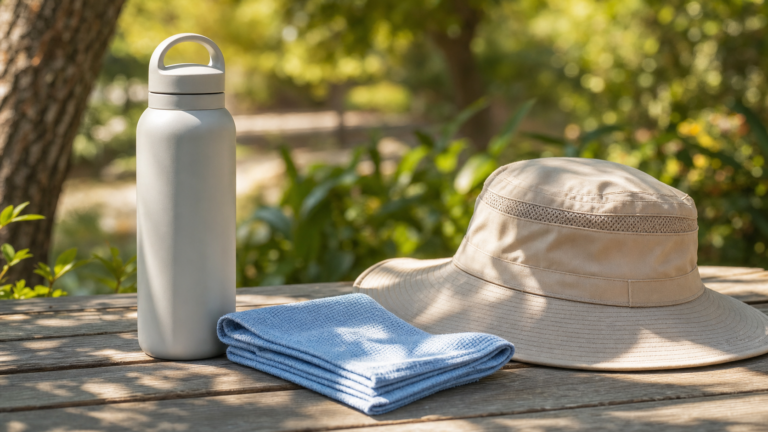
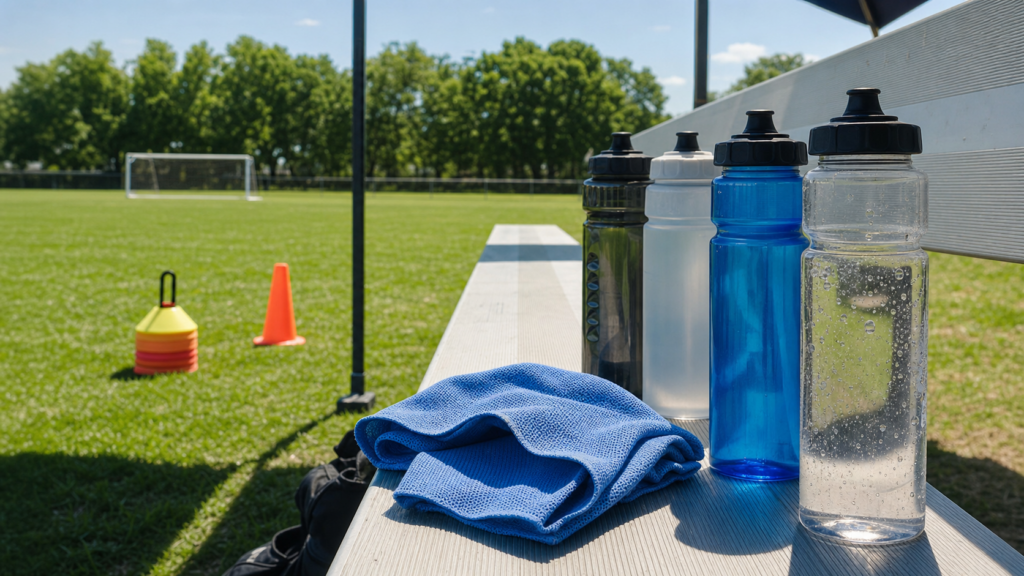
Keep water or a sports drink close enough that athletes do not have to wait or walk far to reach it. Individual containers can make quick drinking easier during breaks. Pack the bottle before leaving home, label it, and check that it is still available when practice moves from one station to another.
Before activity, families can also watch for basic hydration clues, including thirst, how often someone is urinating and urine color. The guide describes lemonade-colored urine as a sign of better hydration, while darker, iced-tea-like urine can signal dehydration. These are general cues rather than a diagnosis; a child who feels unwell should stop and tell an adult.
Use sun protection and schedule smartly
Apply a broad-spectrum sunscreen with a sun protection factor of at least 30 to dry skin about 15 minutes before going outside. Water- and sweat-resistant sunscreen is useful for activities involving swimming or heavy sweating, but it still needs to be reapplied according to the product label and after toweling off.
Ask whether the practice plan includes shaded recovery areas, frequent water breaks and permission to pause or leave the field. A shorter session, a moved start time or a lower-intensity drill may be the better choice on a difficult afternoon. No schedule is more important than a player’s safety.
Know when heat illness is becoming an emergency
Exertional heat stroke can be fatal without quick recognition and proper treatment. Warning signs can include a body temperature usually above 104 degrees Fahrenheit, confusion or other nervous-system changes, nausea, vomiting or diarrhea, headache, dizziness, weakness, a fast heart rate, fast breathing, low blood pressure, dehydration or unusual combativeness.
If a player appears confused, collapses, has a seizure, or shows signs of severe heat illness, call 911 immediately and follow the team’s emergency plan. Move the person to a cooler place and begin active cooling while waiting for help if it can be done safely. Do not send an ill athlete home alone or leave the person unattended.
A short Spartanburg practice checklist
- Confirm the start time, heat plan, water access and shaded recovery area.
- Pack a filled individual bottle, sunscreen and light, breathable clothing.
- Ask about the seven- to 14-day adjustment plan when equipment or intensity is increasing.
- Tell the coach about symptoms, health concerns or a recent break from training.
- Agree on who will call for help and how the child will be cooled if warning signs appear.
For Spartanburg families, the practical goal is a team culture in which drinking, resting and speaking up are treated as part of preparation. Athletes should not have to wait until they feel faint to ask for a break.