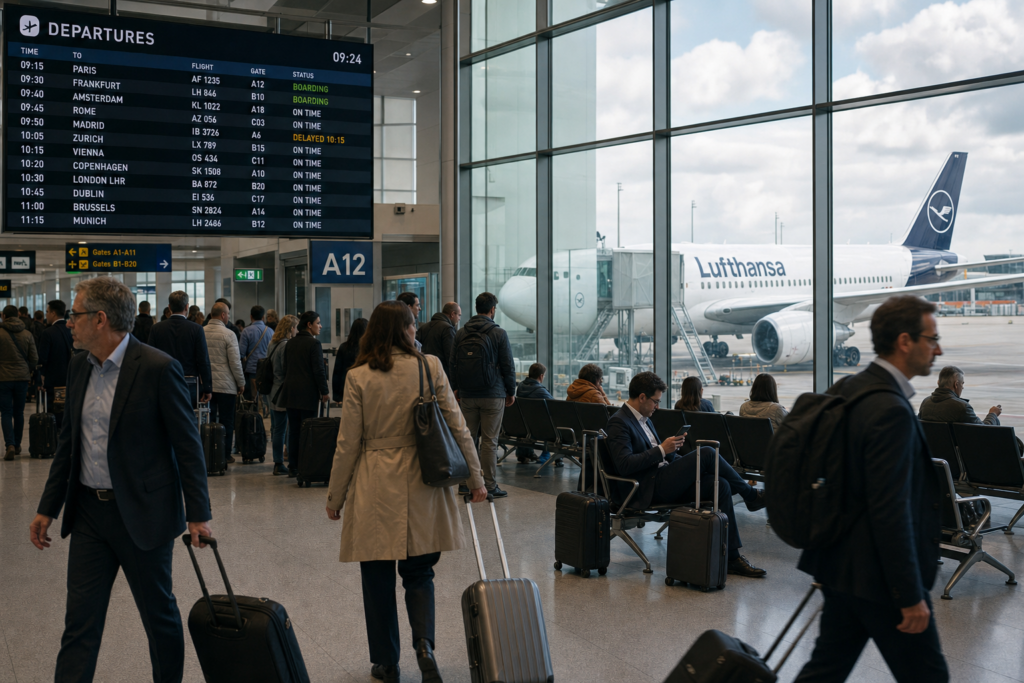
The European Commission moved on May 8 to protect air travelers by clarifying that airlines operating in the European Union are prohibited from tacking on fuel surcharges after passengers have already paid for their tickets — a practice that had drawn consumer complaints in France and Spain as jet fuel prices surged following the outbreak of the Middle East conflict.
Commission spokesperson Anna-Kaisa Itkonen stated plainly that adding a fuel supplement to a ticket after it has already been purchased cannot be justified under existing EU law. The commission’s formal guidance note, published Friday, cited the Air Services Regulation, which requires airlines to display a fully inclusive final price at the time of booking. That obligation means the total price a traveler sees at checkout must already account for all unavoidable and foreseeable taxes, fees, and charges — leaving no room for retroactive additions.
The commission’s guidance was prompted in part by practices of Volotea, a Spanish low-cost carrier operating flights in France, which had been charging customers a fuel fee of up to €14 on tickets already purchased. Volotea structured the surcharge so that fuel prices were reviewed seven days before a passenger’s departure and applied retroactively. French authorities have been examining whether that practice complies with consumer law. Volotea defended the fee as temporary, transparent, and legally reviewed by independent legal counsel — but the commission’s language left little ambiguity about the EU’s interpretation of the rules.
The guidance also addressed what counts as an “extraordinary circumstance” that could exempt an airline from paying passenger compensation when flights are canceled. Airlines such as Lufthansa, British Airways, and KLM had cited soaring kerosene costs as grounds for avoiding compensation obligations. The commission rejected that framing: high jet fuel prices — even prices driven by a major geopolitical disruption — do not constitute an extraordinary circumstance that relieves airlines of their compensation duties. Only a demonstrably localized fuel shortage at a specific airport would meet that bar. When a cancellation happens because of ordinary price volatility rather than a provable supply disruption, passengers remain entitled to a full reimbursement, rebooking on alternative flights, or a return flight, along with airport assistance. For cancellations made fewer than 14 days before departure, financial compensation must be provided in full or as an equal-value travel voucher.
The commission acknowledged the real financial pressure facing carriers. Jet fuel costs more than doubled in the months following the closure of the Strait of Hormuz in February, which disrupted roughly one-fifth of the world’s oil supply. To ease operational strain without sacrificing passenger protections, the guidance offered airlines two specific accommodations: an exemption from the standard 90 percent fuel-uplift rule under the ReFuelEU Aviation regulation, which can apply where safety requirements force airlines to carry extra fuel from departure airports where destination airports are experiencing shortages; and relief from the normal airport slot-use obligations, so that carriers are not penalized for leaving slots idle when genuine fuel supply disruptions at a specific airport make operating a flight unsafe or impractical.
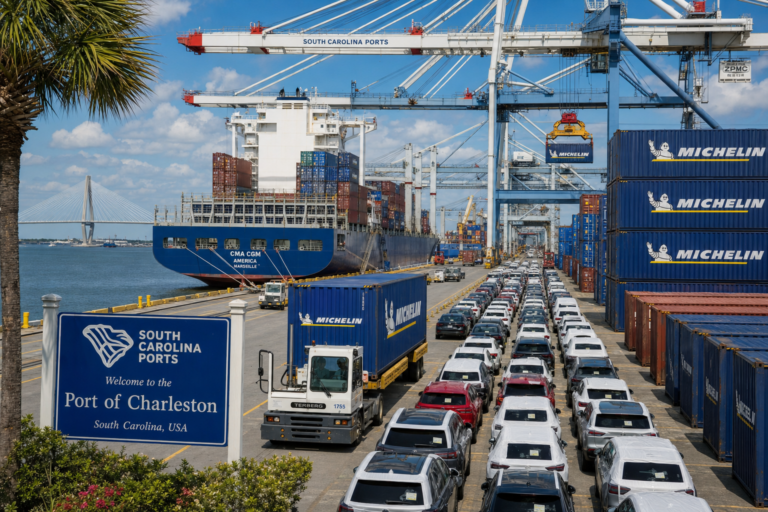
For Upstate South Carolina businesses with active European operations, the ruling carries direct relevance. BMW Manufacturing in Spartanburg County — the largest BMW production facility in the world by volume, which exports vehicles to more than 120 countries including major European markets — regularly sends executives and engineers on transatlantic trips to the company’s German headquarters and European partners. Milliken & Company, headquartered in Spartanburg and operating manufacturing sites across Europe, and Michelin North America, whose U.S. headquarters is in Greenville, similarly maintain large European business travel footprints. Employees and managers from those operations typically connect through Charlotte Douglas International Airport — the primary hub serving the Greenville-Spartanburg metro — or fly out of Greenville-Spartanburg International Airport (GSP), which offers connections through Charlotte, Atlanta, and other gateway hubs to European destinations.
For those travelers booking European-carrier tickets or itineraries that touch EU-regulated airspace, the commission’s clarification means that any fare agreed upon at checkout is the fare that must be honored at departure. If an airline operating under EU jurisdiction attempts to collect a post-purchase fuel fee, the passenger has grounds to challenge it under the Air Services Regulation and potentially under EU unfair commercial practices law. Passengers who already paid such a surcharge may be entitled to a refund of the amount charged after purchase.
The commission also encouraged EU member states to activate clauses in public service obligation contracts with airlines when fuel shortages make operating those routes financially untenable, providing a structured mechanism for governments to support essential air connectivity without forcing airlines to absorb the full cost of supply shocks.
The commission’s guidance does not create new law — it clarifies the application of rules already on the books. Enforcement remains the responsibility of national consumer protection authorities in each EU member state. The French investigation into Volotea’s surcharge practice will continue under French law, with the commission’s guidance now providing an explicit policy backdrop for regulators making their determination.