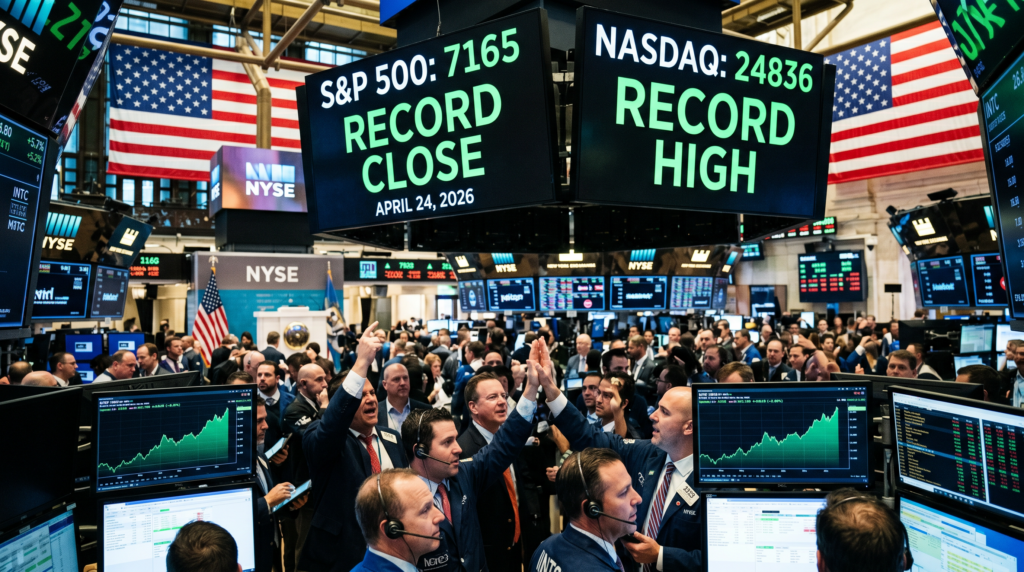
U.S. stock markets closed April 24 with the S&P 500 and Nasdaq Composite both reaching new all-time highs, powered by a historic single-session rally from Intel. The S&P 500 added 56.68 points to close at 7,165.08, while the Nasdaq climbed 398 points to 24,836.60 — each index posting its fourth consecutive weekly gain. The Dow edged down 79 points and ended the week lower.
Intel shares surged 23.6% to close at $82.57, topping the company’s dot-com-era record from 2000 for an all-time high — its best single-day gain since October 1987. First-quarter revenue reached $13.6 billion, up 7% year over year, driven by what Intel’s finance chief described as unprecedented AI-processor demand. AMD and Qualcomm posted double-digit gains in sympathy, and the Philadelphia Semiconductor Index hit its own record.
Oil markets pulled back. Brent crude for July delivery fell roughly 0.2% to near $99 per barrel on signals that U.S. and Iranian diplomats were moving toward fresh talks in Pakistan aimed at potentially reopening the Strait of Hormuz. Markets read the development as reducing near-term supply-disruption risk, though crude has swung sharply all month.
Both stories affect Spartanburg’s industrial economy. BMW Manufacturing, the county’s largest employer with more than 11,000 direct jobs, ships roughly half its vehicles through East Coast ports, so freight surcharges tied to crude prices run through vehicle logistics costs. Greer’s Inland Port recorded 205,523 rail lifts in its most recent fiscal year — a record — with fuel exposure embedded in every container move to Charleston. Michelin North America, headquartered in Greenville, monitors petroleum-derived inputs as a primary cost variable across its SC tire plants.
Spartanburg commuters on I-26 and I-85 averaged $3.80 per gallon for regular unleaded as of April 25, per national fuel-tracking data, versus $2.75 a year ago and below the $4.03 national average. Sen. Tim Scott, chairman of the Senate Banking Committee, has pressed capital-formation legislation this session as equity markets closed April at records despite months of conflict-driven volatility.