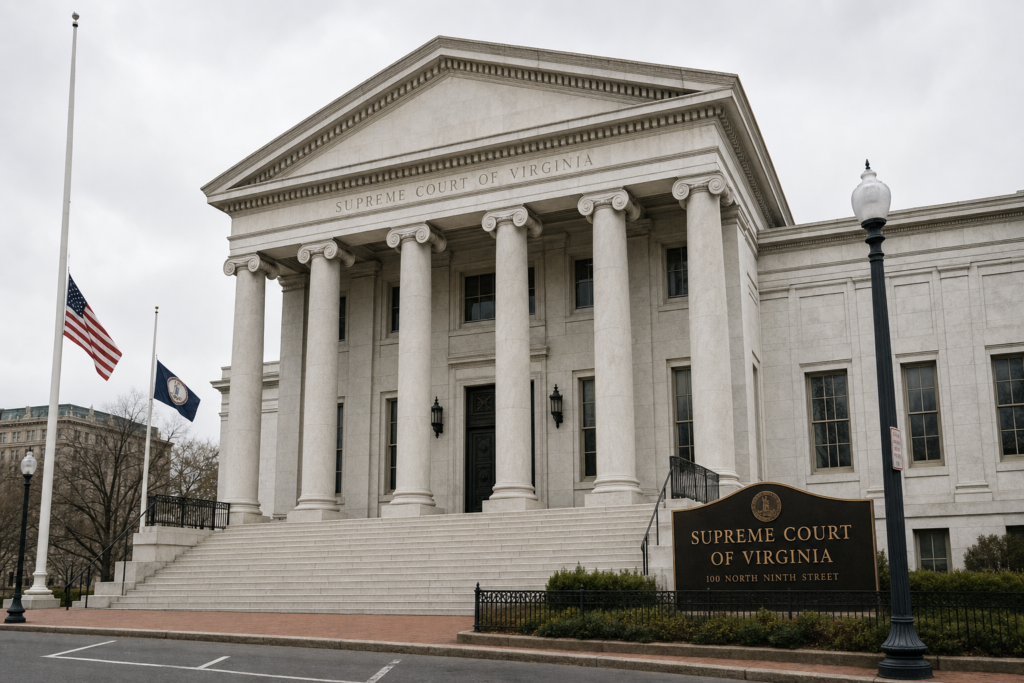
Virginia’s highest court delivered a decisive ruling on May 8, 2026, striking down a voter-approved redistricting referendum that Democrats had hoped would reshape the state’s congressional map ahead of the November midterms. The 4–3 decision by the Supreme Court of Virginia invalidates a constitutional amendment that voters narrowly approved in an April 21 special election, leaving existing district lines in place for the upcoming congressional races.
The majority opinion, authored by Justice Arthur D. Kelsey, found that the Virginia General Assembly failed to follow the state constitution’s multi-step amendment process when it referred the measure to voters. The court’s central finding centered on the requirement that a constitutional amendment must pass the legislature twice, with an intervening election of the House of Delegates separating the two votes. Because early voting in Virginia had already begun on September 19, 2025 — before the General Assembly convened a special session to pass the amendment’s text on October 31, 2025 — the court concluded that the required intervening election had already commenced when the first legislative vote occurred. That technical misstep, the majority held, fatally undermined the entire process. The ruling declared the resulting referendum vote null and void.
The practical consequence is significant: the Democratic-drawn congressional map that would have shifted 10 of Virginia’s 11 seats toward blue-leaning configurations will not take effect. Instead, the 2021 court-drawn maps — which currently produce a slim 6–5 Democratic advantage in Virginia’s congressional delegation — will remain the governing framework for the 2026 elections. Democrats had projected the proposed new maps could yield as many as four additional House seats, a potentially pivotal gain in the fight for control of Congress.
Virginia Attorney General Jay Jones, a Democrat, characterized the ruling as prioritizing political outcomes over legal merit, arguing that the decision silenced the votes of more than three million Virginians who participated in the April special election. Jones announced that his office intends to appeal to the United States Supreme Court, and filed a request with the Virginia Supreme Court on Friday afternoon to stay its ruling while that federal appeal is prepared. Dissenting justices within the state court also questioned the majority’s interpretation of when the intervening-election window should be measured.
Republican officials celebrated the outcome. The Republican National Committee, which had filed the original lawsuit in Tazewell County Circuit Court in February challenging the amendment process, framed the ruling as a vindication of constitutional order. Legal observers noted that the court’s reasoning was deliberately narrow, grounded solely in Virginia’s constitutional amendment procedures rather than any federal equal protection or Voting Rights Act grounds.
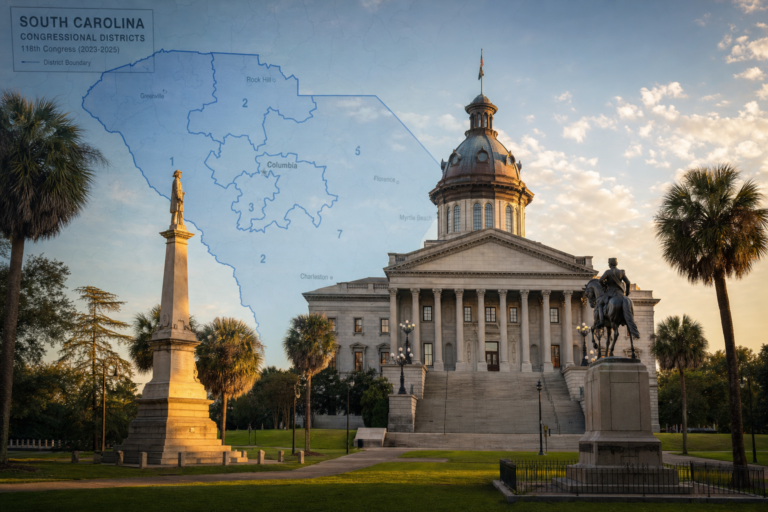
For South Carolina and Upstate communities, the Virginia ruling carries direct relevance to the national redistricting landscape. Senator Lindsey Graham, who sits on the Senate Judiciary Committee, has been a vocal critic of mid-decade redistricting efforts by Democrats in multiple states, arguing they represent an attempt to circumvent the census-based cycle that has traditionally governed map-drawing. The Virginia decision aligns with that position by halting one of the most ambitious Democratic redistricting moves of the current cycle. Representative William Timmons, who represents the SC-4 district covering Greenville and Spartanburg counties and serves on the House Oversight Committee, is among the Republican members whose party stands to benefit if the national redistricting battlefield does not continue to yield offsetting Democratic pickups in states like Virginia.
Virginia’s case has also attracted attention from election law scholars, who noted the ruling’s limited geographic scope: the procedural holding under Virginia’s amendment rules does not export to other states pursuing similar redistricting efforts. California, for instance, has pursued its own mid-decade map revision, and analysts say that effort remains legally distinct from what the Virginia court addressed.
With Democrats moving toward a federal appeal, the question of whether the US Supreme Court will take up the case adds another layer of uncertainty to the 2026 midterm map. Legal analysts have noted that the high court earlier declined to block the Virginia referendum on racial gerrymandering grounds raised by Republicans in a separate federal proceeding — that appeal was turned down in February — making the posture of any new appeal less predictable. As the redistricting battle continues across multiple states, the Virginia outcome stands as a reminder that procedural compliance in the amendment process can prove as decisive as any substantive policy argument.